

Case Study: How Aister Instrument Supports Large-Diameter Electromagnetic Flow Measurement in Municipal Water Supply Networks
2026-08-25
Municipal water supply networks are the “arteries” of modern cities. Their main pipelines typically involve large diameters, significant variations between daytime peak demand and nighttime minimum flow, humid underground valve chambers, and complex installation conditions.
For water utilities, accurate flow measurement is essential not only for monitoring water production and consumption, but also for district metered areas (DMAs), water distribution management, leakage control, and water billing.
In large-diameter applications, electromagnetic flow meters are widely used because they have no moving parts, create very little pressure loss, and can provide stable measurement for conductive liquids such as treated water and drinking water.
This case study explains how Aister Instrument, a China-based flow meter manufacturer, developed a large-diameter electromagnetic flow measurement solution for municipal water supply applications, with a focus on measurement stability, difficult underground installation conditions, pipeline modification, and integration with smart water management systems.
1. Measurement Challenges in Municipal Water Supply Networks
Before selecting a flow meter for a municipal water supply pipeline, water utilities need to consider much more than pipe diameter.
1.1 Large Flow Variations Between Peak and Minimum Demand
Water consumption can vary significantly throughout the day.
During daytime peak periods, the pipeline may carry a very large flow rate. At night, however, the flow rate can decrease substantially.
If a flow meter does not provide stable measurement across a sufficiently wide flow range, measurement errors can become more noticeable at low flow rates.
This is particularly important for water utilities that use nighttime flow data for leakage monitoring. Even relatively small measurement deviations can affect water balance calculations and make it more difficult to identify potential leakage.
Therefore, the flow meter needs to provide reliable measurement under both high-flow and low-flow conditions.
1.2 Humid and Difficult Underground Installation Conditions
Large-diameter flow meters for municipal water supply are often installed inside underground valve chambers or meter pits.
These environments can expose instrumentation to:
- High humidity
- Condensation
- Water accumulation
- Corrosive conditions
- Limited ventilation
- Difficult maintenance access
If the meter is not properly protected, moisture can eventually affect electrical connections, signal stability, and long-term reliability.
For unattended or remotely monitored water supply networks, reliable operation under these conditions is especially important.
1.3 Complex Pipeline Modification for Large-Diameter Systems
Large municipal pipelines can range from DN300 to DN1200 or even larger.
Replacing or modifying an operating pipeline can be complicated because shutting down a major water supply line may affect residential areas, commercial users, and industrial customers.
For new pipelines, a conventional flanged electromagnetic flow meter is usually straightforward to install. However, adding a new measurement point to an existing pipeline can be much more challenging.
This creates a need for different installation configurations depending on whether the project involves a new pipeline or an existing operating network.
1.4 Integration With Smart Water Management Systems
Modern water utilities increasingly rely on SCADA and smart water management platforms to monitor distribution networks.
A suitable flow meter therefore needs to provide reliable data such as:
- Instantaneous flow rate
- Totalized flow
- Flow direction
- Meter status
- Diagnostic information
These data can then be used for DMA management, water balance analysis, network scheduling, and leakage monitoring.
2. Aister's Large-Diameter Electromagnetic Flow Meter Solution
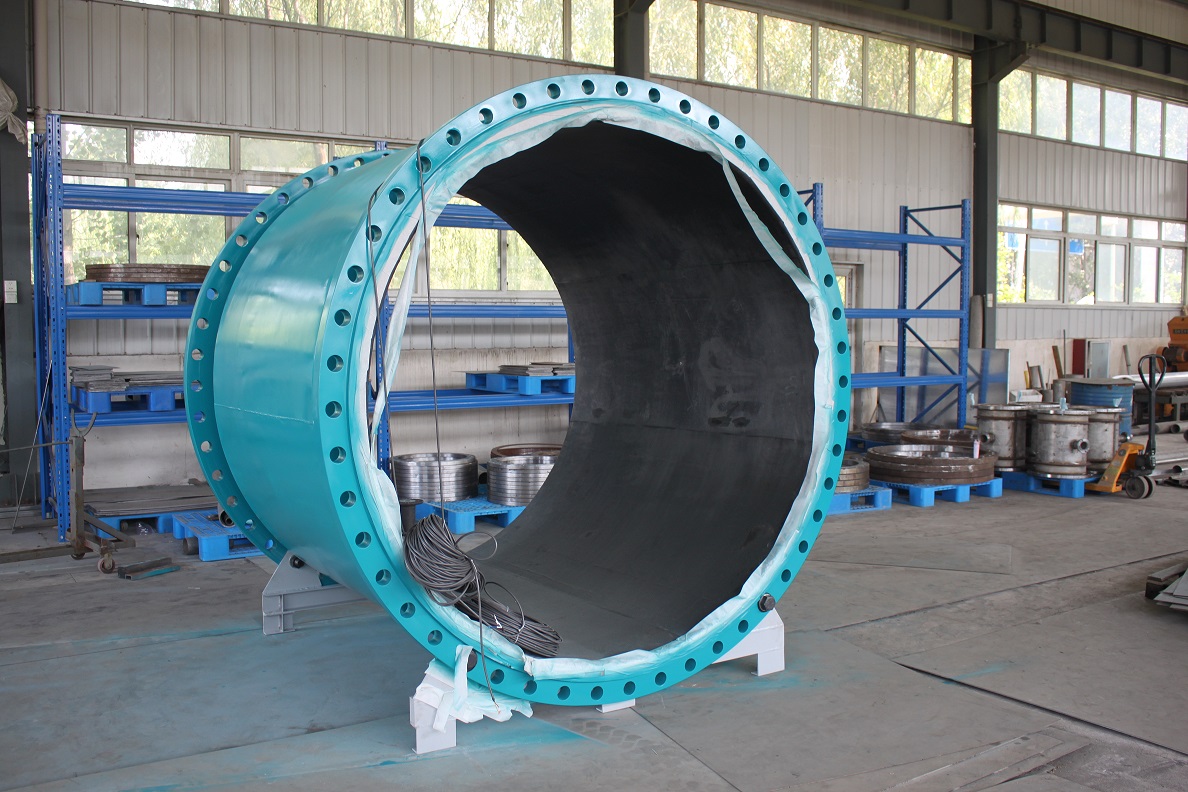
To address these requirements, Aister Instrument provides large-diameter electromagnetic flow meters designed for municipal water supply applications.
The product range covers pipe sizes from DN25 to DN2000, with both flanged inline and insertion-type configurations available.
Depending on the application and installation conditions, measurement accuracy can reach approximately ±0.2% to ±0.5%.
The solution focuses on four key areas:
- Wide flow-range measurement
- Reliable operation in humid environments
- Flexible installation for new and existing pipelines
- Communication with water management systems
3. Stable Measurement From Peak Flow to Low Nighttime Flow
One of the key requirements for municipal water supply measurement is maintaining reliable performance when flow conditions change significantly.
Aister electromagnetic flow meters use an excitation and signal-processing design intended to improve measurement stability across changing flow conditions.
At high flow rates, the meter provides stable measurement for water distribution monitoring. At low flow rates, improved signal processing helps maintain a reliable flow signal, which is important for nighttime flow monitoring and water balance analysis.
Because electromagnetic flow meters have no mechanical throttling components inside the measuring tube, they introduce very little additional pressure loss compared with many mechanical flow measurement technologies.
This makes them suitable for large municipal pipelines where maintaining hydraulic efficiency is important.
For water applications, the measuring tube can also be configured with 316L stainless steel electrodes and a rubber lining, providing compatibility with treated water and helping maintain a smooth internal flow path.
4. Protection for Humid Underground Metering Locations
Underground valve chambers can be challenging environments for electronic instrumentation.
For these applications, Aister offers a remote-mounted or split-type configuration, allowing the sensor and converter to be installed separately.
The sensor can remain in the underground pipeline or meter chamber while the converter can be positioned in a more accessible and relatively dry location.
Depending on the model and configuration, protective features can include:
- High enclosure protection
- Empty-pipe detection
- Self-diagnostic functions
- Signal abnormality monitoring
- Separate sensor and converter installation
These functions help reduce the risk of unreliable data being transmitted to a water management platform when abnormal operating conditions occur.
For municipal networks with limited on-site personnel, diagnostic functions can also help maintenance teams identify potential problems before carrying out field inspections.
5. Two Installation Solutions for New and Existing Pipelines
Different pipeline conditions require different flow meter installation methods.
Aister provides both inline and insertion-type electromagnetic flow meters to address these requirements.
5.1 New Municipal Water Supply Pipelines: Inline Electromagnetic Flow Meter
For newly constructed pipelines, a flanged inline electromagnetic flow meter is typically the preferred solution.
The flow meter is installed directly between the pipeline flanges, providing a conventional and well-established installation method.
This configuration is particularly suitable for:
- Water treatment plant outlet pipelines
- Large municipal water supply pipelines
- Main distribution pipelines
- Major metering stations
- Water billing and custody-related measurement points
For applications where measurement traceability is important, factory flow calibration can also be performed before shipment.
5.2 Existing Pipelines: Insertion Electromagnetic Flow Meter
Existing municipal pipelines present a different challenge.
If the pipeline is already operating, shutting down the water supply to install a conventional inline flow meter may require extensive coordination and can increase project costs.
An insertion electromagnetic flow meter provides an alternative for adding measurement points to existing pipelines.
Depending on the pipeline design and installation conditions, insertion meters can be installed through a prepared access point, potentially reducing the amount of pipeline modification required.
This configuration can be considered for:
- Existing main water pipelines
- DMA monitoring points
- Additional flow monitoring locations
- Pipeline network upgrades
- Flow measurement expansion projects
The exact installation method should be determined according to pipeline pressure, pipe material, diameter, access conditions, and local installation requirements.
6. Communication With Smart Water Management Systems
A flow meter used in a modern municipal water network is not simply a local measuring instrument. It is also an important data source for the water management system.
Aister electromagnetic flow meters can support communication interfaces such as:
- 4–20 mA
- RS485 / Modbus
- Wireless remote transmission options such as NB-IoT, depending on the configuration
The transmitted data can include instantaneous flow, cumulative flow, and meter status or diagnostic information.
These data can be integrated into higher-level systems for applications such as:
DMA Management
Flow meters installed at district boundaries can provide the flow data required for district metered area management.
Water Balance Analysis
By comparing inlet and outlet flow data, utilities can better understand water distribution and identify abnormal differences.
Leakage Monitoring
Accurate nighttime flow data can support leakage investigation and help utilities identify unusual consumption patterns.
Network Scheduling
Real-time flow information can provide useful input for water distribution and pumping management.
7. Manufacturing and Service Support From a China-Based Supplier
For large-diameter flow meter projects, product specifications are only one part of the purchasing decision.
Project managers and procurement teams also need to consider production capacity, calibration capability, delivery schedules, technical support, and after-sales service.
Aister Instrument operates a large-scale manufacturing and calibration facility and provides electromagnetic flow meters covering a wide range of pipe sizes.
For large-diameter projects, production and calibration capabilities can help provide more predictable delivery and product consistency.
As a China-based flow meter manufacturer, Aister also provides technical support for product selection, installation, commissioning, troubleshooting, and calibration.
For international buyers, working directly with a manufacturer can also provide an alternative to purchasing through multiple distribution layers, depending on the project and supply arrangement.
8. Key Selection and Installation Considerations
Choosing a large-diameter electromagnetic flow meter should always start with the actual operating conditions rather than simply selecting a meter based on pipe diameter.
The following factors should be evaluated before placing an order.
8.1 Inline or Insertion Type?
For new pipelines and critical metering points, an inline electromagnetic flow meter is generally a straightforward choice.
For existing pipelines where shutdown and extensive pipe modification are difficult, an insertion-type solution may be more practical.
8.2 Flow Range
Provide the supplier with the expected:
- Minimum flow rate
- Normal flow rate
- Maximum flow rate
- Operating pressure
- Pipe diameter
The minimum flow rate is particularly important when the meter will be used for nighttime flow monitoring or leakage analysis.
8.3 Installation Conditions
For underground installations, consider:
- Flooding risk
- Condensation
- Enclosure protection
- Cable routing
- Converter accessibility
- Grounding conditions
A split-type configuration can be useful when the sensor is installed in a difficult underground location.
8.4 Pipeline Installation
Proper installation is essential for maintaining measurement performance.
Depending on the meter design and pipeline conditions, sufficient straight pipe sections should be provided upstream and downstream, and proper grounding should be ensured.
Air bubbles should also be minimized. For example, air-release arrangements may be required at high points in the pipeline where air accumulation is possible.
8.5 Calibration and Verification
For applications involving billing, water accounting, or other critical measurements, the required calibration and verification procedures should be determined according to the applicable local regulations, project specifications, and contractual requirements.
This is particularly important for international projects because metering and verification requirements vary between countries and jurisdictions.
9. Why This Solution Is Suitable for Municipal Water Supply Applications
The main challenge in large-diameter municipal water measurement is not simply measuring a large amount of water.
The flow meter needs to maintain reliable measurement across changing flow conditions, withstand difficult installation environments, provide appropriate installation options, and deliver usable data to the water management system.
Aister's solution addresses these requirements through:
Wide Diameter Range:
Flow meter sizes from DN25 to DN2000 are available for different pipeline applications.
Flexible Installation:
Inline and insertion electromagnetic flow meter configurations can be selected according to new-build or existing-pipeline conditions.
Stable Water Measurement:
The electromagnetic measurement principle and signal-processing design support reliable measurement across changing flow conditions.
Low Pressure Loss:
The measuring tube has no mechanical moving or throttling components, helping minimize additional pressure loss.
Underground Installation Options:
Split-type configurations and protective functions can be used for difficult underground environments.
Smart Water Integration:
Communication options such as 4–20 mA and RS485/Modbus support integration with monitoring and control systems.
Manufacturer Support:
Direct technical support from a China-based manufacturer can cover selection, configuration, installation guidance, troubleshooting, and calibration services.
10. Conclusion
Large-diameter electromagnetic flow measurement plays an important role in modern municipal water supply networks.
For water utilities, the right solution needs to address much more than pipe diameter. Flow variation, low-flow measurement, underground installation conditions, pipeline modification, communication requirements, calibration, and long-term maintenance all need to be considered during the selection process.
In this application, Aister Instrument provides a flexible solution based on large-diameter electromagnetic flow meters, including inline and insertion configurations.
With a wide size range, water-compatible materials, protective functions, communication options, and manufacturing and calibration capabilities, Aister's electromagnetic flow meters can be considered for municipal water supply pipelines, water treatment plants, DMA monitoring points, and other large-scale water measurement applications.
Looking for a Large-Diameter Electromagnetic Flow Meter?
If you are planning a municipal water supply project or need to replace an existing flow meter, the correct model should be selected according to your actual pipeline and operating conditions.
Send us your pipe diameter, minimum/normal/maximum flow rate, operating pressure, installation environment, and communication requirements. The Aister technical team can help recommend a suitable electromagnetic flow meter configuration for your application. Click here to contact us.
Share To:
Next Post:
News
- Why is the thermal gas mass flowmeter not affected by pressure strength and temperature?
- What to do when a thermal gas mass flow meter fails?
- How are thermal gas mass flow meters used? What are the applications?
- Under what circumstances is the gas measurement need to be regulated compensated vortex flowmeter
- Why Is The Aister Thermal Gas Mass Flowmeter So Popular ?
- Gas turbine flowmeter manufacturers explain their main advantages in measurement
- Gas turbine flowmeter manufacturer Aister instrument field experience summary
- Aister Instrument Empowerment Conference