


How Accurate Is The Electromagnetic Flow Meter?
2026-04-24
In industrial process control, accurate flow measurement is essential for maintaining efficiency, reducing costs, and ensuring product quality. Among various technologies, electromagnetic flow meters (EMFs) stand out due to their non-intrusive design, negligible pressure loss, and ability to handle challenging fluids.
However, a common question remains: how accurate are electromagnetic flow meters?
The answer depends on multiple variables, including device specifications, installation quality, and operating conditions. This article provides a structured breakdown to help you understand and optimize EMF accuracy.
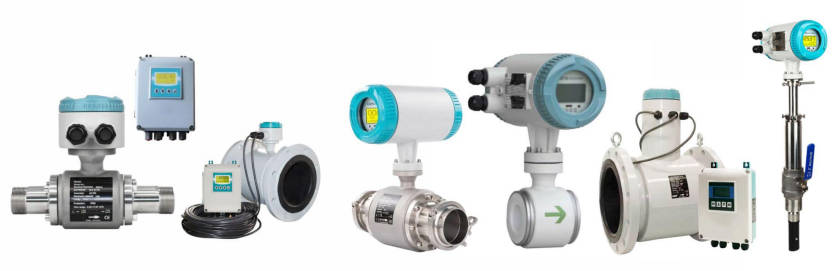
1. Typical Accuracy Range of Electromagnetic Flow Meters
Electromagnetic flow meters operate based on Faraday’s Law of Electromagnetic Induction, where a conductive fluid moving through a magnetic field induces a voltage proportional to its velocity.
Standard Accuracy Levels
- General industrial EMFs: ±0.2% to ±3% of full scale (FS)
- High-precision EMFs: ±0.1% to ±0.3% FS
- Repeatability: typically ±0.1% to ±0.5% FS
Accuracy vs. Repeatability
- Accuracy: closeness to the true value
- Repeatability: consistency of repeated measurements
EMFs are known for excellent repeatability, making them highly reliable for long-term monitoring even when absolute accuracy slightly varies.
2. Key Factors Affecting EMF Accuracy
The real-world performance of an electromagnetic flow meter is influenced by several critical factors:
2.1 Fluid Conductivity and Properties
- Minimum conductivity requirement: typically ≥5 μS/cm
- Low or fluctuating conductivity → reduced signal strength
- Suspended solids → electrode fouling → measurement drift
Impact: Errors can increase significantly if fluid conditions fall outside design parameters.
2.2 Meter Design and Material Selection
- Electrode alignment and spacing affect linearity
- Magnetic field uniformity is critical for stable signals
- Liner materials must match the application:
- PTFE: strong corrosion resistance
- Ceramic: excellent abrasion resistance
Impact: Poor material selection leads to wear, corrosion, and long-term accuracy degradation.
2.3 Installation Conditions
Proper installation is one of the most overlooked factors.
Best practices:
- Upstream straight pipe: 5–10D
- Downstream straight pipe: 3–5D
- Avoid valves, elbows, and pumps near the meter
Common issues:
- Flow turbulence → ±1% to ±5% error
- Air bubbles → signal instability
- Pipe misalignment → distorted readings
2.4 Environmental Influences
- Temperature fluctuations → signal drift
- Vibration → mechanical instability
- Electromagnetic interference (EMI) → signal noise
Mitigation methods:
- Temperature compensation
- Shock-absorbing mounts
- Shielded cables and grounding
2.5 Calibration and Maintenance
Even high-end EMFs require regular upkeep.
Recommended schedule:
- Weekly: zero-point check
- Monthly: electrode inspection/cleaning
- Quarterly: calibration verification
Impact: Lack of calibration can cause error drift from ±1.5% to over ±4%.
3. Real-World Application Performance
Chemical Industry
- Corrosive media (e.g., acids, brine)
- Use of PTFE liners and corrosion-resistant electrodes
- Achieved accuracy: ±0.5% FS
Metallurgy
- Abrasive slurries (ore, minerals)
- Ceramic liners prevent wear
- Accuracy maintained at ±1.5% FS
Environmental Engineering
- Wastewater and sludge measurement
- Stable accuracy: ±0.4% FS
- Enables compliance with discharge standards
Power Generation
- Urea dosing in desulfurization systems
- Smart EMFs with heating/anti-crystallization
- Accuracy: ±0.3% FS
4. How to Maximize Electromagnetic Flow Meter Accuracy
To achieve optimal performance, follow these practical strategies:
- Select the right model: match materials and specs to your medium
- Ensure proper installation: maintain required straight pipe lengths
- Control operating conditions: minimize vibration and EMI
- Implement routine maintenance: clean electrodes and recalibrate regularly
- Use smart diagnostics: leverage modern EMFs with real-time monitoring
Conclusion
Electromagnetic flow meters deliver high accuracy—typically ranging from ±0.2% to ±3% FS, with advanced models reaching ±0.1% to ±0.3% FS. However, their real-world performance depends heavily on application conditions, installation quality, and maintenance practices.
By understanding the influencing factors and applying best practices, industries can fully leverage EMFs for reliable, precise flow measurement. As technology advances, smart electromagnetic flow meters will continue to enhance accuracy, reduce operational costs, and support increasingly complex industrial processes.
If you need professional advice or product recommendations, feel free to contact us anytime.
Share To:
Previous Post:
Next Post:
News
- Why is the thermal gas mass flowmeter not affected by pressure strength and temperature?
- What to do when a thermal gas mass flow meter fails?
- How are thermal gas mass flow meters used? What are the applications?
- Under what circumstances is the gas measurement need to be regulated compensated vortex flowmeter
- Why Is The Aister Thermal Gas Mass Flowmeter So Popular ?
- Gas turbine flowmeter manufacturers explain their main advantages in measurement
- Gas turbine flowmeter manufacturer Aister instrument field experience summary
- Aister Instrument Empowerment Conference