


Thermal Gas Mass Flow Meter: Working Principle, Features, and Applications
2026-01-15
Thermal gas mass flow meters are widely used in industrial gas measurement due to their high accuracy, wide turndown ratio, and ability to directly measure mass flow. Based on thermal diffusion or thermal distribution principles, these instruments calculate gas flow by measuring the amount of heat carried away by the flowing gas.
This article provides a comprehensive overview of thermal gas mass flow meters, including their working principles, system components, technical advantages, typical applications, and key selection considerations.
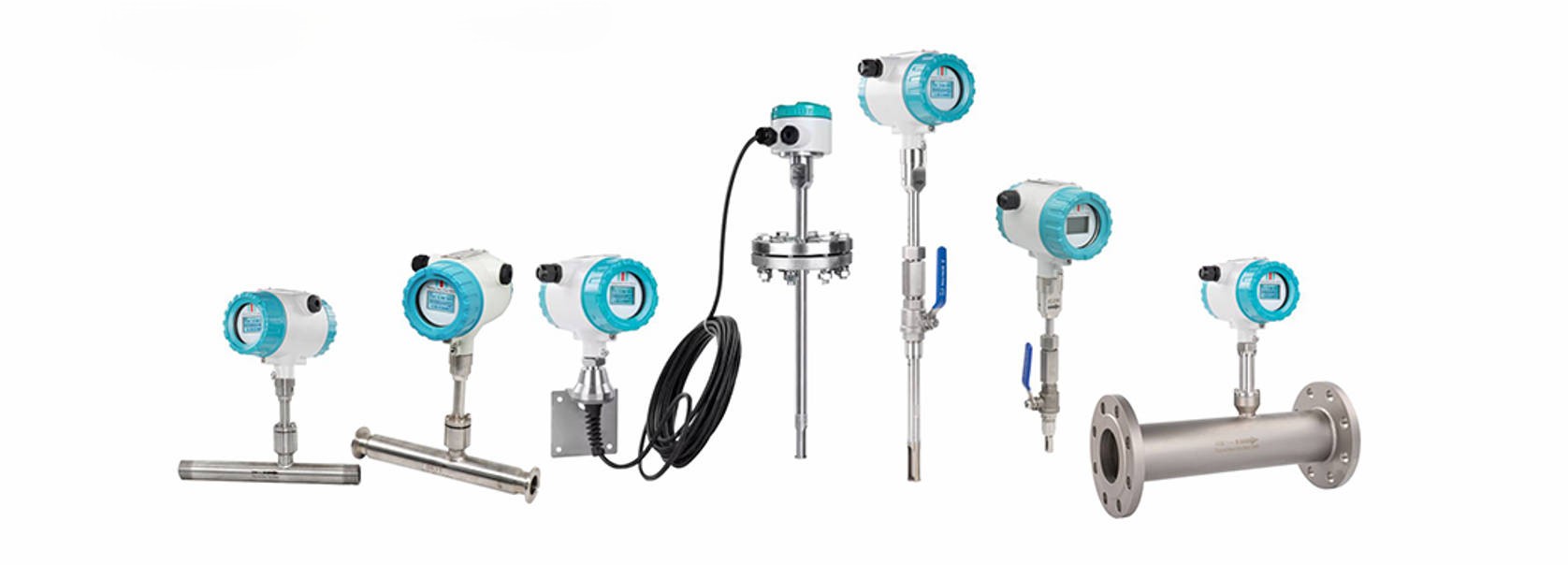
1. Working Principle of Thermal Gas Mass Flow Meters
1.1 Thermal Diffusion Principle
When gas flows past a heated sensor element, it absorbs and carries away heat. As the gas velocity increases, more heat is removed, causing a greater temperature drop in the heated element. By measuring this temperature change, the mass flow rate of the gas can be accurately calculated.
1.2 Thermal Distribution Principle
At lower gas velocities, the thermal distribution principle is more effective. It determines flow rate by analyzing the temperature distribution around the heated sensor. Changes in the thermal profile directly correspond to changes in gas flow.
2. System Components
2.1 Sensor Assembly
Most thermal gas mass flow meters use two precision RTD (Resistance Temperature Detector) sensors:
-
Velocity sensor: measures the cooling effect caused by gas flow
-
Temperature sensor: measures the actual gas temperature for compensation and accuracy
2.2 Signal Processing Electronics
The signal processing circuit amplifies and converts the weak sensor signals into standardized outputs, such as 4–20 mA or digital communication signals.
2.3 Display and Control Module
The display module shows real-time flow data. Advanced models also support data logging, alarm functions, and parameter configuration.
3. Key Technical Features and Advantages
-
Direct mass flow measurement
Measures mass flow directly without requiring temperature or pressure compensation. -
Wide turndown ratio
Typical turndown ratios reach 30:1 or higher, making it suitable for both low and high flow rates, especially in large-diameter pipelines. -
Low pressure loss
Insertion-type installation causes minimal pressure drop, ensuring negligible impact on the system. -
Strong corrosion resistance
Sensor materials can be customized for various corrosive gases. -
High accuracy and repeatability
Measurement accuracy is typically within ±1%, with excellent long-term stability. -
Easy installation and maintenance
Small diameters use inline installation, while large diameters use insertion type. Online maintenance and hot-tap insertion are possible. -
High level of intelligence
Supports parameter adjustment, factory calibration data storage, and on-site verification traceability.
4. Suitable Measurement Conditions
-
Dry and clean gases
Best suited for gases with stable composition, such as air, nitrogen, oxygen, hydrogen, natural gas, and LPG. -
High temperature and pressure environments
Operates reliably at ambient temperatures, up to 100°C or higher, and under positive, negative, or high-pressure conditions. -
Low flow velocity measurement
Capable of directly measuring very low gas flow rates without additional flow conditioning.
5. Typical Industry Applications
5.1 Oil and Gas Industry
-
Natural gas, LNG, and LPG flow measurement
-
Flare gas monitoring and leak detection
-
Gas quality analysis and custody-related monitoring
5.2 Chemical Industry
-
Reactor feed gas measurement
-
Exhaust gas and emission monitoring
-
Sampling systems and induced draft fan flow measurement
5.3 Power Generation
-
Fuel gas flow measurement for combustion systems
-
Primary and secondary air measurement in boilers
-
Auxiliary gas systems in power plants
5.4 Iron and Steel Industry
-
High-temperature gas measurement (blast furnace gas, coke oven gas)
-
Fuel gas control for reheating furnaces and rolling mills
5.5 Medical Industry
-
Oxygen, nitrogen, and argon flow measurement in medical equipment
-
Applications in oxygen concentrators and anesthesia machines
5.6 Environmental Protection
-
Industrial exhaust emission monitoring
-
Aeration gas measurement in wastewater treatment plants
5.7 Food and Beverage Industry
-
CO₂ injection control
-
Gas filling and packaging processes
6. Selection and Installation Considerations
-
Gas type: Select a model specifically calibrated for gas measurement
-
Pipe diameter: Inline type for DN15–DN50; insertion type for DN50 and above
-
Hazardous area: Choose explosion-proof models for classified zones
-
Output signal: 4–20 mA for conventional control; digital protocols for smart systems
-
Installation location: Avoid valves, elbows, and turbulent areas; ensure straight pipe lengths (typically 10D upstream and 5D downstream)
-
Installation orientation:
-
Gas: horizontal or vertical upward flow
-
Liquid: avoid orientations that trap air bubbles
-
Conclusion
Thermal gas mass flow meters offer a reliable, accurate, and cost-effective solution for measuring gas mass flow across a wide range of industrial applications. With advantages such as direct mass flow measurement, wide turndown ratio, minimal pressure loss, and intelligent functionality, they are particularly suitable for dry gases with stable composition.
By understanding the working principles, application conditions, and proper selection criteria, users can maximize measurement accuracy and long-term operational performance. Choosing the right thermal gas mass flow meter is a critical step toward efficient process control, energy management, and regulatory compliance.
If you need professional advice or product recommendations, feel free to contact us anytime.
Share To:
Next Post:
News
- Why is the thermal gas mass flowmeter not affected by pressure strength and temperature?
- What to do when a thermal gas mass flow meter fails?
- How are thermal gas mass flow meters used? What are the applications?
- Under what circumstances is the gas measurement need to be regulated compensated vortex flowmeter
- Why Is The Aister Thermal Gas Mass Flowmeter So Popular ?
- Gas turbine flowmeter manufacturers explain their main advantages in measurement
- Gas turbine flowmeter manufacturer Aister instrument field experience summary
- Aister Instrument Empowerment Conference