


Top 10 Steam Flow Meter Brands & Expert Buying Guide
2025-11-28
Choosing the right steam flow meter is critical for ensuring accurate energy measurement, stable process control, and long-term operational efficiency. This guide explains the top 10 global steam flow meter brands, compares their strengths, and provides a step-by-step selection method to help you make an informed decision.
Top 10 Recommended Steam Flow Meter Brands
Below are ten globally recognized brands—ranked in no particular order—known for reliability, technology leadership, and strong market presence.
1. Endress+Hauser (E+H) — Switzerland
E+H is one of the most trusted names in process instrumentation.
Highlights:
-
Extremely comprehensive product ecosystem
-
Promass (Coriolis) and Prosonic (ultrasonic) series lead high-end applications
-
Exceptional accuracy and long-term stability
-
Higher price segment
2. Emerson — USA
Emerson owns Micro Motion and Rosemount, both global leaders.
Strengths:
-
Micro Motion Coriolis meters set the industry benchmark
-
Rosemount vortex and DP transmitters widely adopted
-
Strong performance in steam, gas, and liquid measurement
3. Siemens — Germany
A major automation powerhouse with a robust flow portfolio.
Advantages:
-
SITRANS F series covers vortex, ultrasonic, and more
-
Excellent system integration with Siemens PLC/DCS
-
Highly reliable for demanding industrial environments
4. Yokogawa — Japan
Known for precision, durability, and strong engineering depth.
Key Features:
-
DY vortex meter used extensively in power and chemical industries
-
World-class DP transmitters
-
Very stable performance even under harsh conditions
5. KROHNE — Germany
A specialist in flow and level measurement.
Highlights:
-
Innovative OPTISONIC series for steam
-
ALTOSONIC and IFC vortex series widely used
-
Strong R&D capability
6. ABB — Switzerland
A global automation leader with a wide flow measurement range.
Benefits:
-
Stable and proven DP and vortex technologies
-
Good balance of performance and cost
-
Strong global support network
7. Honeywell — USA
A long-standing leader in industrial automation.
Strengths:
-
Highly reliable instruments for process control
-
Excellent system-level integration for energy management
-
Smart diagnostics and digital features
8. AISTER — China
A fast-growing domestic brand focused on steam energy solutions.
Advantages:
-
High cost-performance ratio
-
Strong local service and rapid response
-
Ideal for small to mid-scale industrial projects
Visit our related article: Steam Vortex Flow Meter
9. SICK — Germany
Famous for sensors, but also solid in ultrasonic measurement.
Key Use Cases:
-
Specific steam or gas applications requiring non-intrusive measurement
-
Advanced signal processing
10. FCI — USA
Expert in thermal mass flow measurement.
Best For:
-
Low-velocity saturated steam
-
Mixed gas or large-diameter pipelines
-
Niche conditions where thermal mass provides advantages
How to Choose the Right Steam Flow Meter
Selecting the correct meter depends heavily on steam type, process conditions, and accuracy requirements. Follow this 3-step framework:
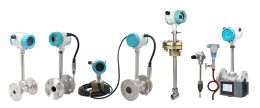
Step 1: Understand Your Measurement Conditions
Gather the following essential parameters:
✔ Steam Type
-
Saturated steam → typically vortex
-
Superheated steam → DP or orifice plates often preferred
✔ Flow Range
Provide minimum, normal, and maximum flow values (kg/h or t/h).
✔ Pipeline Data
-
Pipe diameter
-
Orientation (horizontal/vertical)
-
Available straight-pipe lengths
✔ Process Parameters
-
Operating pressure
-
Operating temperature
✔ Accuracy Requirement
-
Internal energy monitoring: ±1.5–2.5% is fine
-
Trade settlement: ±1.0% or better required
Step 2: Select the Appropriate Measurement Technology
1) Vortex Flow Meter
Best for: saturated steam, general industrial applications
Pros: stable, accurate, reasonable cost
Cons: avoid high vibration locations
2) Differential Pressure (DP) / Orifice Plate
Best for: high-temperature, high-pressure superheated steam
Pros: very mature technology, high reliability
Cons: higher pressure loss, more components required
3) Averaging Pitot (Annubar)
Best for: large pipes, low accuracy needs
Pros: cheap, low pressure drop
Cons: lower precision
4) Clamp-on Ultrasonic
Best for: no downtime allowed, temporary measurement
Pros: non-intrusive
Cons: accuracy affected by pipe conditions
Step 3: Evaluate Brand, System Integration & After-Sales Support
Integrated Compensation
Steam requires mass flow measurement.
Choose:
-
Built-in temperature & pressure compensation, or
-
A reliable multi-instrument integration (flow + pressure + temperature + totalizer)
Total Cost of Ownership
Consider:
-
Installation cost
-
Maintenance cost
-
Long-term energy loss from pressure drop (important for DP systems)
Service & Certification
-
Fast support = reduced downtime
-
Check for compliance (ATEX, SIL, calibration certificates, etc.)
If you’re unsure, see our Steam Meter Selection Guide: How to Choose a Vortex Meter
Conclusion
Selecting the right steam flow meter requires balancing accuracy, durability, installation conditions, and cost. The top brands listed—E+H, Emerson, Siemens, Yokogawa, KROHNE, ABB, Honeywell, AISTER, SICK, and FCI—each offer strengths suited to different industrial needs. By following the structured selection steps and comparing technologies carefully, you can ensure a reliable, efficient, and long-lasting steam measurement solution.
Share To:
Previous Post:
Next Post:
News
- Why is the thermal gas mass flowmeter not affected by pressure strength and temperature?
- What to do when a thermal gas mass flow meter fails?
- How are thermal gas mass flow meters used? What are the applications?
- Under what circumstances is the gas measurement need to be regulated compensated vortex flowmeter
- Why Is The Aister Thermal Gas Mass Flowmeter So Popular ?
- Gas turbine flowmeter manufacturers explain their main advantages in measurement
- Gas turbine flowmeter manufacturer Aister instrument field experience summary
- Aister Instrument Empowerment Conference