

How to Choose Flow Meters for Industrial Wastewater and Aging Pipeline Upgrades: A Practical Case Study
2026-08-26
Selecting a flow meter for municipal water supply, wastewater treatment, or industrial wastewater applications is not simply a matter of choosing the most accurate instrument. Real-world conditions can be much more complicated: wastewater may contain suspended solids, air bubbles, oil, corrosive chemicals, or sediment, while aging pipelines may have limited installation space and cannot always be shut down for meter installation.
For engineers, contractors, and international buyers sourcing flow measurement equipment, the key question is often:
How can you achieve reliable flow measurement without creating additional installation, maintenance, or shutdown problems?
This case-based guide explains how electromagnetic, ultrasonic, radar, and other flow measurement technologies can be selected for industrial wastewater and aging pipeline renovation projects.
1. Flow Meter Selection for Industrial Wastewater
Industrial wastewater is one of the more demanding applications for flow measurement. The fluid composition can vary significantly, and the pipeline may contain suspended solids, sludge, air bubbles, corrosive chemicals, or other contaminants.
The four main selection considerations are:
- Resistance to corrosion
- Resistance to clogging and accumulation
- Stable measurement with air bubbles or suspended solids
- Reliable operation under changing flow conditions
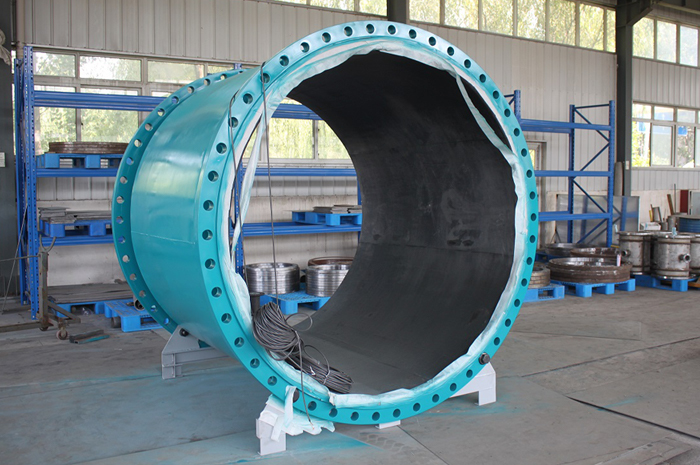
Electromagnetic Flow Meter: The First Choice for Conductive Wastewater
For full-pipe industrial wastewater applications, an electromagnetic flow meter is often one of the most practical choices.
An electromagnetic flow meter operates according to Faraday's law of electromagnetic induction. Because it has no obstruction inside the measuring tube, it does not introduce significant pressure loss and is less likely to accumulate solids or become entangled with debris.
It is suitable for conductive liquids such as:
- Industrial wastewater
- Municipal wastewater
- Acid and alkaline solutions
- Salt-containing wastewater
- Sludge and other conductive fluids
For applications where the fluid conductivity is sufficiently high, electromagnetic flow meters can provide stable measurement over a wide flow range and can also support bidirectional flow measurement.
What Should Buyers Check Before Ordering?
Before selecting an electromagnetic flow meter for wastewater, overseas buyers should confirm several parameters:
1. Electrical conductivity
The measured liquid must have sufficient electrical conductivity for the electromagnetic measuring principle to work properly. The exact minimum conductivity depends on the instrument design, so buyers should confirm this value with the manufacturer.
2. Electrode material
Corrosive wastewater may require different electrode materials, such as:
- 316L stainless steel
- Hastelloy
- Titanium
The correct electrode material should be selected according to the chemical composition and concentration of the wastewater.
3. Lining material
The liner must also be compatible with the measured medium. Rubber, PTFE, PFA, and other lining materials may be considered depending on temperature, corrosion, and abrasion conditions.
4. Air bubbles
Excessive air or gas in the pipeline can affect measurement stability. Proper pipeline design and installation are therefore important.
5. Flow velocity
For high-flow-velocity applications or electrically noisy environments, the excitation and signal processing configuration should be evaluated carefully.
When Should You Not Use an Electromagnetic Flow Meter?
Electromagnetic flow meters are not suitable for non-conductive liquids such as many petroleum-based fluids and certain oils.
If the wastewater has very low conductivity or contains a significant amount of oil, ultrasonic or radar-based measurement technologies may be more appropriate.
2. Ultrasonic Flow Meters for Difficult Wastewater Applications
Ultrasonic flow meters provide another option for wastewater measurement, especially when pipeline modification should be minimized.
Different ultrasonic technologies are suitable for different wastewater conditions.
Doppler Ultrasonic Flow Meter
Doppler ultrasonic flow meters rely on suspended particles or gas bubbles in the liquid to generate the Doppler signal.
This makes them particularly useful for wastewater containing:
- Suspended solids
- Sludge
- Sediment
- Air bubbles
However, the concentration and distribution of particles need to be sufficient for reliable measurement.
Transit-Time Ultrasonic Flow Meter
Transit-time ultrasonic flow meters generally perform better when the liquid contains relatively low concentrations of suspended solids and gas.
They are therefore more commonly considered for cleaner water, treated wastewater, or applications where the liquid condition is relatively stable.
For temporary flow monitoring or applications where pipeline modification is undesirable, clamp-on ultrasonic flow meters can also be attractive because the sensors can be installed externally without cutting the pipe.
3. Special Wastewater Conditions Require Different Technologies
Not every wastewater application should use the same flow meter.
| Operating Condition | Recommended Technology | Main Reason |
|---|---|---|
| Conductive, full-pipe wastewater | Electromagnetic flow meter | No internal obstruction and good chemical compatibility |
| Low-conductivity or oily wastewater | Ultrasonic or radar flow meter | Not dependent on liquid conductivity |
| Wastewater with suspended solids | Doppler ultrasonic flow meter | Uses particles or bubbles for measurement |
| High-viscosity liquid | Target flow meter or other suitable technology | Better suited to specific high-viscosity conditions |
| Non-full pipe flow | Radar or Doppler ultrasonic flow meter | Suitable for partially filled pipelines |
| Open-channel wastewater | Open-channel ultrasonic flow meter + Parshall flume | Designed for gravity-flow measurement |
Technology selection should always be based on actual process conditions rather than the liquid name alone.
4. Flow Meter Selection for Aging Pipeline Renovation
Aging water and wastewater pipelines create a completely different measurement challenge.
The pipeline may be:
- Very large in diameter
- Difficult to access
- Installed underground
- Partially deteriorated
- Filled with sediment
- Operating continuously
- Difficult or impossible to shut down
This creates a major conflict:
The operator needs accurate flow measurement, but shutting down the pipeline to install a conventional flow meter may not be practical.
This is where insertion flow meters and clamp-on technologies can provide significant advantages.
5. Full-Bore vs. Insertion Flow Meters
For new pipelines and applications where the pipeline can be shut down, a conventional full-bore electromagnetic flow meter can be an excellent solution.
For large-diameter aging pipelines where shutdown is difficult, an insertion flow meter may significantly reduce installation costs and downtime.
| Comparison | Full-Bore Flow Meter | Insertion Flow Meter |
| Installation | Usually requires pipe modification and shutdown | Can be installed through a prepared tapping point |
| Pipeline shutdown | Usually required | Can be designed for hot-tap installation |
| Large-diameter applications | Higher equipment cost | More economical for many large pipes |
| Measurement accuracy | Typically very high | Depends on sensor design and installation |
| Typical application | New pipelines, metering, process measurement | Pipeline renovation, large-diameter water networks |
| Maintenance | Requires access to the complete meter body | Probe can generally be accessed separately |
The actual installation time depends on pipeline conditions, tapping equipment, safety requirements, and site preparation. Therefore, project-specific evaluation is recommended rather than relying on a fixed installation time.
6. Four Practical Solutions for Aging Water and Wastewater Pipelines
Solution 1: Insertion Electromagnetic Flow Meter
For large-diameter pipelines that cannot easily be shut down, an insertion electromagnetic flow meter can be an effective solution.
The sensor is installed through a tapping point on the existing pipeline, allowing operators to avoid installing a large full-bore meter section.
Aister's MicroFLOW MS6820 insertion electromagnetic flow meter is designed for applications where pipeline modification and installation cost are major considerations.
Potential applications include:
- Municipal water supply networks
- Wastewater pipelines
- Large-diameter water transmission lines
- Aging pipeline monitoring
- Leakage monitoring systems
- Industrial water systems
The technology can be considered for a wide range of pipe materials and large pipe diameters, subject to the actual pipe structure and installation conditions.
Solution 2: Clamp-On Ultrasonic Flow Meter
Clamp-on ultrasonic flow meters install sensors directly onto the external pipe wall.
The main advantage is simple:
No need to cut the pipeline or insert a probe into the flowing medium.
This makes clamp-on ultrasonic flow meters particularly attractive when:
- Pipeline shutdown is not possible
- The existing pipe must remain intact
- Temporary measurement is required
- The project needs a relatively low-impact installation
However, pipe material, wall thickness, internal lining, pipe condition, and acoustic coupling must be carefully evaluated before installation.
Solution 3: Radar Flow Meter
Radar flow meters provide a non-contact measurement method.
For open channels, partially filled pipelines, or locations where wastewater contains significant amounts of sediment and debris, non-contact radar measurement can help avoid problems associated with sensors installed directly in the flow.
Radar flow measurement can be considered for:
- Open channels
- Partially filled pipelines
- Wastewater channels
- Sewage networks with heavy sediment
- Locations where sensor fouling is a concern
Solution 4: Insertion Ultrasonic Flow Meter
Insertion ultrasonic flow meters can be considered for large-diameter pipelines where installing a full-bore flow meter would be expensive or disruptive.
They may be particularly useful when:
- The pipe diameter is large
- Pipeline shutdown is difficult
- Installation space is limited
- External clamp-on measurement is affected by pipe conditions
As with any insertion technology, correct sensor positioning and installation are critical to measurement performance.
7. Case Study: Flow Measurement for an Aging Wastewater Pipeline
One practical application involved the renovation and flow monitoring of aging wastewater pipelines with large diameters.
Project Challenges
The pipeline system had several difficult characteristics:
- Large pipe diameters ranging from approximately DN600 to DN1600
- Limited straight pipe sections
- Disturbed flow profiles
- Wastewater containing sediment and air bubbles
- Continuous operation requirements
- No convenient opportunity for a prolonged shutdown
Installing a conventional full-bore flow meter would have required more extensive pipeline modification and could have increased both project cost and downtime.
Recommended Solution
An Aister MicroFLOW MS6820 insertion electromagnetic flow meter was selected as the measurement solution.
The insertion design allowed the existing pipeline to be retained while reducing the amount of pipeline modification required.
The key technical objectives were:
- Stable measurement under low-flow conditions
- Reliable measurement in wastewater
- Minimized installation disruption
- Compatibility with large-diameter pipelines
- Long-term monitoring capability
Reported Application Results
According to the project information, the application achieved stable measurement at low flow velocities, with reported accuracy of approximately ±0.3% and a wide measurement range.
The project also reported improvements in network flow-balance monitoring and reduced losses.
For buyers evaluating a similar project, however, it is important to distinguish between instrument accuracy and overall system accuracy. Actual network measurement performance depends on installation conditions, flow profile, pipeline geometry, sensor positioning, and calibration.
8. Case Study: DMA-Based Water Network Leakage Monitoring
Flow meters are not only used for basic flow measurement. They can also become an important part of a District Metered Area (DMA) water management system.
A typical leakage monitoring system divides the water distribution network into smaller measurement zones.
Flow meters installed at key boundaries can monitor:
- Inlet flow
- Nighttime minimum flow
- Abnormal flow patterns
- Potential leakage
- Water balance between supply and consumption
Insertion electromagnetic flow meters can be particularly useful for large existing pipelines because they can reduce the need for major pipeline reconstruction.
For international water utilities, this approach can be valuable when the objective is not simply to measure flow, but to identify abnormal consumption and potential network leakage.
9. Case Study: Large-Diameter Water Transmission Pipeline
Large water transmission pipelines present another common challenge.
For example, a DN2000 pipeline can make the installation of a conventional full-bore electromagnetic flow meter expensive and difficult because the meter body itself becomes very large.
An insertion electromagnetic flow meter provides another approach.
Instead of replacing a complete section of the large pipeline, the measurement sensor is installed through a tapping point.
This approach can help reduce:
- Equipment cost
- Pipeline modification
- Installation space requirements
- Shutdown requirements
- Construction complexity
For large-diameter municipal water projects, the total project cost should therefore be evaluated based on equipment + installation + shutdown + maintenance, rather than the flow meter purchase price alone.
10. Quick Flow Meter Selection Guide
The following table provides a practical starting point for engineers and procurement teams.
| Application | Recommended Solution | Main Advantage |
| Conductive industrial wastewater, full pipe | Full-bore or insertion electromagnetic flow meter | No internal obstruction and reliable liquid measurement |
| Low-conductivity or oily wastewater | Ultrasonic or radar flow meter | Not dependent on liquid conductivity |
| Wastewater containing suspended solids | Doppler ultrasonic flow meter | Suitable for particle-containing liquids |
| Non-full pipe wastewater | Radar or Doppler ultrasonic flow meter | Suitable for partially filled flow conditions |
| Aging pipeline that cannot be shut down | Insertion electromagnetic flow meter | Can support hot-tap installation |
| Pipeline in good condition | Clamp-on ultrasonic flow meter | External installation without pipe cutting |
| Pipeline with heavy sediment or debris | Radar flow meter | Non-contact measurement |
| Large-diameter pipeline | Insertion electromagnetic or ultrasonic flow meter | Avoids the cost of a very large full-bore meter |
| Open-channel wastewater | Open-channel ultrasonic flow meter + Parshall flume | Designed for gravity-flow measurement |
11. A Five-Step Flow Meter Selection Method
Before requesting a quotation from a flow meter manufacturer, international buyers should prepare the following information.
Step 1: Determine the Flow Condition
First determine whether the pipeline is:
- Full pipe
- Partially filled
- Open channel
- Gravity flow
This decision immediately eliminates several unsuitable technologies.
Step 2: Evaluate the Medium
Provide the supplier with information about:
- Electrical conductivity
- Temperature
- Pressure
- Corrosiveness
- Viscosity
- Suspended solids
- Air or gas content
- Oil content
The more complete the process information, the more accurately the supplier can recommend the appropriate flow meter.
Step 3: Confirm the Installation Conditions
This is particularly important for aging pipelines.
Confirm:
- Pipe diameter
- Pipe material
- Pipe wall thickness
- Internal lining
- Available straight pipe length
- Installation space
- Whether the pipeline can be shut down
- Whether hot-tap installation is permitted
Step 4: Define the Required Accuracy
Not every application requires the same measurement accuracy.
For example:
Process monitoring:
A moderate accuracy level may be sufficient.
Water balance and leakage monitoring:
Higher measurement reliability may be more important.
Custody transfer or commercial metering:
The required accuracy and applicable metering standards should be clearly defined before selecting the instrument.
Step 5: Calculate Total Cost of Ownership
Do not compare flow meters based only on the equipment quotation.
Consider:
Total Cost = Equipment + Installation + Pipeline Modification + Shutdown Cost + Commissioning + Maintenance
For large-diameter aging pipelines, the installation and shutdown costs can sometimes be as important as the instrument price itself.
12. What Should You Ask a Flow Meter Manufacturer Before Ordering?
For overseas procurement teams, sending complete technical information to the manufacturer can significantly speed up the quotation and selection process.
A basic inquiry should include:
- Medium
- Pipe diameter
- Pipe material
- Pipe wall thickness
- Flow rate or flow velocity
- Minimum and maximum flow
- Operating temperature
- Operating pressure
- Electrical conductivity
- Suspended solids concentration
- Whether the pipe is always full
- Installation location
- Required output
- Power supply
- Communication requirements
- Required accuracy
- Whether pipeline shutdown is possible
For underground or outdoor installations, environmental protection should also be considered. In applications such as wastewater wells or flood-prone locations, an appropriately rated enclosure and sensor protection level are important.
For remote monitoring points, buyers may also consider low-power instruments and wireless communication options such as 4G or NB-IoT, depending on local network availability.
13. Why Insertion Flow Meters Are Becoming Important for Pipeline Renovation
The biggest advantage of insertion technology is not simply the flow meter itself.
It is the ability to upgrade measurement capability without completely rebuilding the existing pipeline.
This is particularly valuable when dealing with:
- Large-diameter pipelines
- Aging municipal water networks
- Continuous wastewater systems
- Difficult underground installations
- Pipelines where shutdowns are expensive
- Leakage monitoring projects
Instead of replacing a large section of pipe, an insertion sensor can provide a more flexible measurement solution.
For infrastructure operators, this can make flow measurement projects easier to implement while reducing disruption to existing operations.
14. Choosing the Right Flow Meter for Your Project
There is no single flow meter that is ideal for every wastewater or pipeline renovation project.
The correct choice depends on the combination of fluid properties, pipe condition, flow profile, pipe diameter, installation restrictions, accuracy requirements, and total project cost.
For conductive wastewater in a full pipeline, an electromagnetic flow meter is often the first technology to consider.
For low-conductivity or oily liquids, ultrasonic or radar technologies may be more suitable.
For large aging pipelines where shutdown is not practical, insertion electromagnetic flow meters can offer a strong balance between measurement performance and installation convenience.
For partially filled or open-channel wastewater, radar and ultrasonic technologies should be evaluated instead of conventional full-pipe flow meters.
If you are sourcing flow meters for a municipal water network, wastewater treatment plant, industrial wastewater system, or large-diameter pipeline renovation project, Aister Instrument can provide flow measurement solutions based on your actual operating conditions.
Send us your pipe diameter, medium, flow range, pipe material, and installation requirements. Our technical team can help you select a suitable flow meter configuration for your project.
Share To:
Next Post:
News
- Why is the thermal gas mass flowmeter not affected by pressure strength and temperature?
- What to do when a thermal gas mass flow meter fails?
- How are thermal gas mass flow meters used? What are the applications?
- Under what circumstances is the gas measurement need to be regulated compensated vortex flowmeter
- Why Is The Aister Thermal Gas Mass Flowmeter So Popular ?
- Gas turbine flowmeter manufacturers explain their main advantages in measurement
- Gas turbine flowmeter manufacturer Aister instrument field experience summary
- Aister Instrument Empowerment Conference