


How Much Does an MFC Cost? 2026 Price Guide to Find the Best Value
2026-08-24
Mass flow controllers (MFCs) are widely used in semiconductor manufacturing, photovoltaics, vacuum coating, analytical instruments, biotechnology and pharmaceuticals, fuel cells, and laboratory applications. With MFC gas flow controller prices ranging from a few hundred dollars to several thousand dollars per unit, buyers often face one fundamental question:
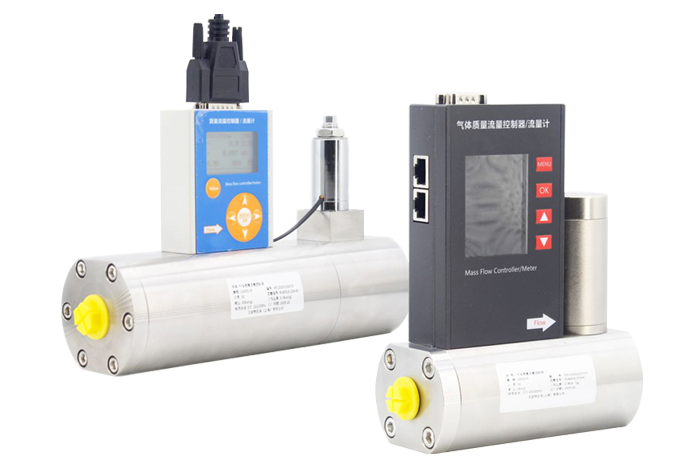
How can you find the best balance between price, performance, and long-term reliability?
A low-cost MFC may appear attractive at first, but if it suffers from poor accuracy, excessive drift, inconsistent repeatability, or a short service life, its total cost of ownership can quickly exceed that of a higher-quality model.
This guide evaluates MFC pricing from four perspectives: price ranges, key cost drivers, selection strategies, and purchasing recommendations, helping international buyers choose an MFC that delivers the right performance without paying for unnecessary features.
1. MFC Gas Flow Controller Price Range
The price of a mass flow controller depends heavily on its accuracy, flow range, gas compatibility, materials, communication functions, certifications, and brand.
The following table provides a general reference for different MFC price levels.
| MFC Level | Approximate Price | Typical Brands / Sources | Typical Applications |
|---|---|---|---|
| Entry-Level / Economical Chinese MFC | USD 110–420 per unit | Some Chinese manufacturers and online brands | Teaching laboratories, basic experiments, non-critical processes |
| Mid-Range Chinese MFC | USD 420–1,110 per unit | Sevenstar, Aister Instrument and other Chinese manufacturers | Industrial equipment, vacuum coating, environmental monitoring, conventional process control |
| Mid-to-High-End Imported MFC | USD 1,110–3,470 per unit | Bronkhorst, MKS, HORIBA, Brooks | Semiconductor applications, high-precision analysis, demanding processes |
| Premium / Customized MFC | Above USD 3,470 | Premium product lines and customized solutions from major brands | Ultra-high-purity gases, corrosive gases, ultra-high precision, special certification requirements |
Is a More Expensive MFC Always Better?
Not necessarily.
Price should never be the only factor when purchasing a gas mass flow controller.
For example, an inexpensive MFC may have a lower initial purchase price but suffer from:
- Poor long-term accuracy
- Large zero-point drift
- Inconsistent repeatability
- Short sensor life
- Difficult calibration
- Limited technical support
For industrial applications, these problems can result in process instability, product losses, additional maintenance, and unexpected downtime.
Therefore, the right question is not simply "How much does an MFC cost?"
It is:
"What level of MFC performance do I actually need for my process?"
2. What Factors Affect MFC Price?
Several technical factors can significantly influence the price of a mass flow controller.
2.1 Accuracy and Repeatability
Accuracy is one of the most important factors affecting MFC pricing.
For example, the price difference between an MFC with an accuracy of ±1% S.P. (Set Point) and one with ±0.5% S.P. can be substantial, particularly for high-end applications.
More demanding processes, such as semiconductor CVD and etching, may require accuracy in the range of ±0.25% to ±0.5% S.P., depending on the process requirements.
Repeatability is another important parameter.
An MFC may have good nominal accuracy but still provide inconsistent results if its repeatability is poor. For processes where flow stability directly affects product quality, repeatability can become a significant hidden cost factor.
Do not evaluate an MFC based on accuracy alone. Always consider accuracy, repeatability, zero stability, and long-term drift together.
2.2 Response Time
Response time determines how quickly an MFC can react when the set point changes.
Typical MFCs may have response times of approximately 1–3 seconds, while high-speed models can achieve response times of 500 ms or less.
Fast response is particularly important in applications involving:
- Rapid process transitions
- Pulsed gas delivery
- Semiconductor processing
- Automated process control
- Fast-changing gas demand
However, not every application requires an ultra-fast MFC.
If your process is relatively stable and does not respond sensitively to short-term flow fluctuations, paying a significant premium for extremely fast response may provide little practical benefit.
Choose response speed according to the actual process dynamics rather than simply selecting the fastest model available.
2.3 Flow Range and Turndown Ratio
Flow range is another major factor in MFC pricing.
A wider turndown ratio, such as 100:1 or higher, allows the controller to regulate a broader range of gas flow rates.
Extremely low flow rates, such as sccm-level applications, and very high flow rates reaching several thousand slm generally require more sophisticated sensor and control technologies.
This can increase manufacturing complexity and cost.
When selecting an MFC, avoid choosing an oversized flow range simply because it appears to provide more capacity.
An excessively large range may reduce the effective control resolution at low flow rates.
The ideal flow range should be based on the actual operating conditions of your system.
2.4 Gas Compatibility and Sealing Materials
The gas being controlled has a major impact on MFC design and price.
MFCs for relatively inert gases such as:
- Nitrogen (N₂)
- Air
- Argon (Ar)
- Oxygen (O₂)
are generally less expensive than MFCs designed for highly corrosive or reactive gases.
Applications involving gases such as Cl₂, HCl, or NH₃ may require:
- Corrosion-resistant wetted materials
- Specialized sensors
- High-performance sealing materials
- FFKM seals
- Surface passivation
- Special cleaning and assembly procedures
These requirements can significantly increase the MFC cost.
Ultra-high-purity gas applications may also require:
- Electropolished wetted surfaces
- Extremely low leakage rates
- High cleanliness manufacturing
- Specialized packaging and testing
For example, applications requiring leakage rates as low as 1 × 10⁻⁹ Pa·m³/s can cost several times more than standard MFC products.
Therefore, always tell the manufacturer exactly which gas will be controlled before requesting a quotation.
2.5 Communication and Smart Functions
The communication interface also affects MFC pricing.
Basic MFCs may use analog signals such as:
- 0–5 V
- 0–10 V
- 4–20 mA
These models are generally more economical and are sufficient for many conventional systems.
More advanced MFCs may support digital communication protocols such as:
- RS485
- Modbus
- DeviceNet
- EtherCAT
- PROFINET
Digital communication can provide advantages in automated production environments, including:
- Remote parameter configuration
- Real-time monitoring
- Process data acquisition
- Fault diagnostics
- Data traceability
Some advanced MFCs also support multi-gas calibration, self-diagnostics, internal data logging, and other intelligent functions.
These features can further increase the purchase price.
However, for an automated production line, the additional cost of digital communication may be justified by the improvements in system integration and data management.
2.6 Certifications and Compliance
Certification requirements can also have a direct impact on MFC prices.
Depending on the application and destination market, buyers may require compliance with standards or certifications such as:
- CE
- RoHS
- ATEX
- IECEx
- SEMI-related requirements
- Industry-specific material or safety requirements
For pharmaceutical, biotechnology, and food-related applications, material compatibility and regulatory requirements may also increase manufacturing and documentation costs.
Before comparing quotations, make sure that the products being compared have the same certification and compliance requirements.
Otherwise, a lower quotation may simply reflect a lower specification.
2.7 Brand and Distribution Premium
Brand reputation and distribution channels can create a significant price difference between otherwise similar MFCs.
Imported MFCs may include additional costs associated with:
- International logistics
- Import duties
- Local distributors
- Technical service networks
- Inventory costs
- Brand premiums
As a result, imported products can sometimes cost 30%–100% more than comparable products from Chinese manufacturers.
This does not mean that imported MFCs are always overpriced or that Chinese products are always better.
For highly demanding semiconductor processes and applications requiring specific certifications or proven long-term performance, established international brands may still provide significant value.
However, for many conventional industrial applications, leading Chinese MFC manufacturers can offer competitive accuracy, repeatability, response time, and communication functions at a substantially lower price.
3. How to Choose the Most Cost-Effective MFC
Strategy 1: Define the Minimum Performance You Actually Need
One of the most effective ways to reduce MFC costs is to avoid paying for performance that your application does not require.
| Application | Recommended Performance | Suggested MFC Level |
| Teaching and basic laboratory experiments | Accuracy around ±1.5% S.P., analog signal | Entry-level Chinese MFC |
| Vacuum coating and heat treatment | Accuracy around ±1% S.P., response ≤1 s | Mid-range Chinese MFC |
| CEMS and VOC monitoring | Accuracy around ±1% S.P., repeatability ≤0.2%, Modbus | Mid-range Chinese MFC |
| Semiconductor front-end processes | Accuracy around ±0.5% S.P., response ≤500 ms, ultra-low leakage | Mid-to-high-end imported MFC |
| Corrosive gas applications | Corrosion-resistant sensor + FFKM seals + passivation | Mid/high-end Chinese or imported MFC |
The key principle is simple:
Buy the performance your process needs—not the highest specification available.
For example, if your process only requires ±1% S.P. accuracy, paying a large premium for ±0.25% S.P. accuracy may not improve your actual process results.
Strategy 2: Consider Technology-Focused Chinese MFC Manufacturers
Chinese MFC manufacturers have made significant progress in areas such as sensor technology, calibration, repeatability, response speed, and digital communication.
For many conventional industrial applications, leading Chinese suppliers can now compete with imported mid-range products while offering a lower purchase price and shorter supply chain.
When evaluating a Chinese MFC supplier, international buyers should focus on the following questions:
Does the manufacturer have its own sensor technology?
A manufacturer that develops or controls its core sensor technology may provide better control over product performance than a company that simply purchases generic sensors and assembles them.
Is every MFC fully calibrated before shipment?
Ask whether the supplier performs full-range calibration and whether a calibration certificate is provided with each unit.
Can the supplier provide verifiable industry references?
Look for manufacturers with practical applications in industries similar to yours.
How strong is the technical support?
For industrial equipment, after-sales service can be just as important as the initial product price.
Check:
- Response time
- Technical documentation
- Troubleshooting support
- Calibration services
- Spare parts availability
- Warranty terms
Strategy 3: Evaluate Total Cost of Ownership
The cheapest MFC is not necessarily the most economical MFC.
The total cost of ownership over the service life of an MFC can include:
Purchase Price + Calibration + Maintenance + Downtime + Replacement Cost + Process Losses
For example, an MFC with poor accuracy may cause process instability or even product rejection.
The resulting financial loss can easily exceed the initial price difference between two MFCs.
You should also consider how easy it is to calibrate and maintain the product.
Questions worth asking the supplier include:
- Is recalibration required?
- Can calibration be performed locally?
- Does the manufacturer provide calibration services?
- How quickly can the MFC be repaired?
- Are replacement sensors available?
- What is the expected service life?
Sensor drift over time is an important hidden cost, particularly in applications where flow accuracy directly affects process quality.
Strategy 4: Negotiate for Volume Purchasing
For production lines, equipment manufacturers, and system integrators that require multiple MFCs, purchasing strategy can have a significant impact on unit cost.
Consider negotiating directly with the manufacturer for:
- Volume pricing
- Annual supply agreements
- Framework contracts
- Reserved production capacity
- OEM solutions
- Customized flow control modules
For larger orders, suppliers may offer meaningful discounts depending on the model, specifications, order quantity, and commercial terms.
Long-term cooperation can also help stabilize pricing and delivery schedules.
For OEM projects, a customized MFC module may provide a better overall solution than purchasing standard products individually.
4. MFC Recommendations by Budget
Budget: USD 70–280 per Unit
Suitable for:
Teaching, basic laboratory experiments, and non-critical applications.
Recommendation:
Choose an entry-level MFC from a reputable Chinese manufacturer with basic calibration capability.
At minimum, ask for a factory calibration report or calibration certificate.
Avoid purchasing completely untraceable products simply because they have the lowest price.
Budget: USD 280–830 per Unit
Suitable for:
Industrial equipment, vacuum systems, environmental monitoring, and conventional process control.
Recommendation:
For many industrial buyers, this is one of the most attractive price ranges in terms of cost versus performance.
Consider Chinese mid-range MFC manufacturers such as Sevenstar, Aister Instrument, and other suppliers with:
- Independent technical capabilities
- Full-range calibration
- Digital communication options
- Application experience
- Technical support
For many conventional industrial applications, MFCs in this price range can provide sufficient performance without the additional cost associated with premium imported brands.
Budget: USD 830–2,080 per Unit
Suitable for:
Precision analytical instruments, semiconductor auxiliary processes, and demanding industrial environments.
Recommendation:
Compare high-end Chinese MFCs with mid-range imported products.
If your process has strict brand or certification requirements, an imported product may be necessary.
If performance, service, delivery time, and overall cost are more important than brand preference, a high-end Chinese MFC may provide a better balance.
Budget: Above USD 2,080 per Unit
Suitable for:
Critical semiconductor processes, ultra-high-purity gases, corrosive gases, and high-precision research applications.
Recommendation:
Imported premium brands may be appropriate for these applications, especially where specific certifications, established process records, or specialized gas-handling technologies are required.
However, do not compare products based on brand name alone.
For corrosive gases, ultra-high-purity gases, or other specialized applications, evaluate the specific model's:
- Wetted materials
- Sealing technology
- Leakage rate
- Cleaning process
- Calibration capability
- Gas compatibility
- Long-term stability
- Technical support
Different distributors can also offer significantly different pricing and service levels for the same product.
5. Common MFC Purchasing Mistakes
| Common Misconception | What You Should Actually Consider |
| "A larger flow range is always better." | An oversized range may reduce control performance at low flow rates. Select the range based on the actual maximum flow and operating conditions. |
| "A cheap MFC is good enough." | Without proper calibration documentation and traceability, accuracy may be difficult to verify, creating risks for process control and data reliability. |
| "Imported MFCs are always better than Chinese products." | In many mid-range industrial applications, leading Chinese manufacturers can offer competitive technical performance at a lower total cost. |
| "An MFC never needs recalibration." | MFC sensors can drift over time. Periodic calibration verification should be considered based on process sensitivity, operating conditions, and manufacturer recommendations. |
| "Digital communication is unnecessary." | For automated production and data traceability, digital communication can provide significant value through monitoring, diagnostics, and system integration. |
6. Final Recommendations: How to Get the Best MFC Value
The most cost-effective MFC is not necessarily the cheapest model, nor is it the model with the highest specifications.
The best MFC is the one that provides the required level of accuracy, stability, repeatability, compatibility, and traceability at a reasonable cost for your actual application.
For many conventional industrial applications, mid-range MFCs from capable Chinese manufacturers can offer an attractive balance between performance, price, delivery, and technical support.
However, applications such as semiconductor front-end processing, ultra-high-purity gas delivery, and highly corrosive gas control may require specialized high-end solutions.
Before requesting an MFC quotation, define the following parameters:
- Gas type – What gas or gas mixture will be controlled?
- Flow range – What are the minimum, normal, and maximum flow rates?
- Required accuracy – What level of accuracy does the process actually require?
- Repeatability – How stable must the flow control be?
- Response time – How quickly does the system need to respond?
- Wetted materials – Are special corrosion-resistant materials required?
- Sealing requirements – Are FFKM or other specialized seals necessary?
- Communication – Do you need analog signals, RS485/Modbus, EtherCAT, PROFINET, or another protocol?
- Certification – Are CE, ATEX, IECEx, SEMI-related, or other compliance requirements applicable?
- Calibration – Will you require a calibration certificate or traceable calibration documentation?
- Quantity – Is this a single-unit purchase, equipment integration project, or volume production requirement?
- After-sales support – How quickly can the supplier provide technical support and calibration services?
Before You Buy an MFC, Ask the Supplier These Questions
A professional MFC supplier should be able to clearly explain:
- What accuracy can you guarantee?
- What is the specified accuracy range?
- What is the repeatability?
- What is the response time?
- What is the turndown ratio?
- Which gases has this model been calibrated for?
- What materials are used for wetted parts and seals?
- Can you provide a full-range calibration certificate?
- What communication protocols are supported?
- Can you provide OEM or customized solutions?
- What is the lead time for samples and bulk orders?
- What technical and after-sales support is available?
The answers to these questions will often tell you much more about the real value of an MFC than the quoted unit price alone.
Looking for a Cost-Effective MFC Gas Flow Controller?
If you are comparing MFC gas flow controller prices for an industrial project, laboratory system, vacuum equipment, environmental monitoring system, or OEM application, do not evaluate suppliers based on price alone.
A suitable MFC should match your gas type, flow range, accuracy, response time, materials, communication requirements, calibration requirements, and application environment.
For buyers considering Chinese MFC manufacturers, requesting a detailed technical quotation is a practical way to compare products on an equivalent basis.
Provide your gas type, flow range, required accuracy, communication interface, quantity, and application requirements to the supplier. A professional manufacturer should be able to recommend the appropriate MFC model and provide a detailed quotation based on your actual operating conditions.
Contact our team for an expert consultation. Let us help you select the most efficient and cost-effective flow meter for your needs.
Share To:
Previous Post:
Next Post:
News
- Why is the thermal gas mass flowmeter not affected by pressure strength and temperature?
- What to do when a thermal gas mass flow meter fails?
- How are thermal gas mass flow meters used? What are the applications?
- Under what circumstances is the gas measurement need to be regulated compensated vortex flowmeter
- Why Is The Aister Thermal Gas Mass Flowmeter So Popular ?
- Gas turbine flowmeter manufacturers explain their main advantages in measurement
- Gas turbine flowmeter manufacturer Aister instrument field experience summary
- Aister Instrument Empowerment Conference