Vortex Flowmeters in High-Temperature Steam: Practical Selection & Testing Guide
In cogeneration plants, food processing, and chemical industries, high-temperature steam is not just energy—it’s a measurement challenge. Poor configuration can lead to unstable readings, large deviations, or complete signal loss.
In cogeneration plants, food processing, and chemical industries, high-temperature steam is not just energy—it’s a measurement challenge. Poor configuration can lead to unstable readings, large deviations, or complete signal loss.
Vortex flowmeters are widely used for steam, but accuracy depends on correct selection and real-world installation discipline.
1. Selection First: Identify Saturated vs. Superheated Steam
A common mistake is selecting a flowmeter based only on pipe diameter. In steam measurement, this is fundamentally flawed.
🔹 Saturated Steam
-
Temperature and pressure are strictly correlated
-
Density can be derived from steam tables
-
Requires single-parameter compensation (pressure OR temperature)
🔹 Superheated Steam
-
Temperature and pressure are independent variables
-
Density varies significantly with both
-
Requires temperature + pressure compensation
👉 Critical Risk:
If superheated steam loses heat during transmission (poor insulation), it may partially condense.
Using single-parameter compensation in this case can cause 10%–20% measurement error.
✅ Best Practice:
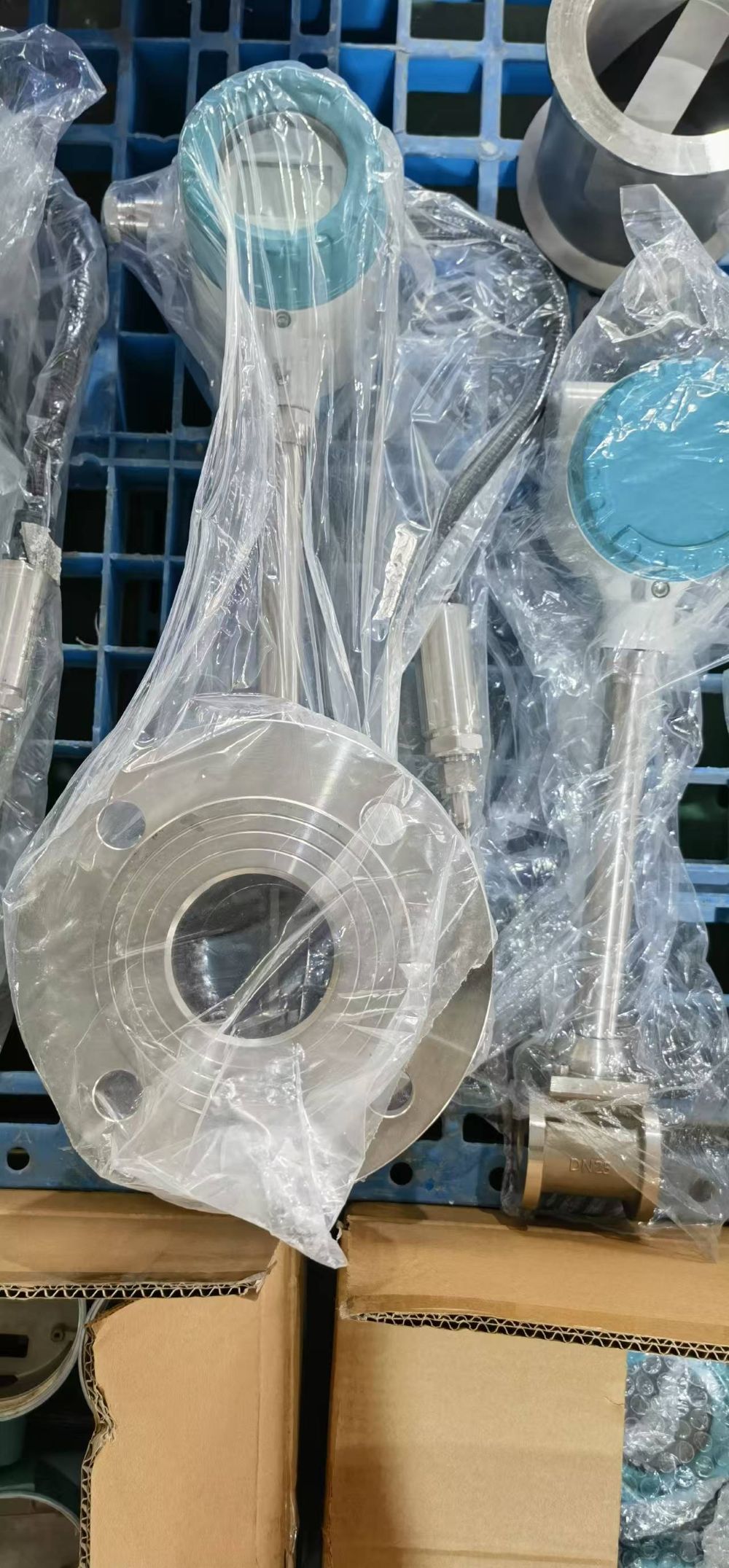
Select an integrated temperature & pressure compensated vortex flowmeter.
This ensures real-time density correction and stable mass flow calculation.
2. Installation: Where Most Failures Actually Happen
In high-temperature steam, installation quality directly determines measurement reliability.
🔹 (1) Thermal Management Matters
-
Do NOT fully insulate the sensor neck
-
Leave at least 50% exposed for heat dissipation
-
Ensure good ventilation or add a heat shield if needed
👉 Otherwise, the electronics may overheat and drift or fail.
🔹 (2) Straight Pipe Length Is Non-Negotiable
Vortex flowmeters rely on stable vortex shedding—disturbed flow = wrong readings.
-
Upstream: ≥15D–20D
-
Downstream: ≥5D
⚠️ Special attention:
After pressure-reducing valves, insufficient straight length may cause:
-
Flow disturbance
-
Adiabatic expansion
-
Phase change
👉 Result: severely unstable signals
🔹 (3) Vibration = Silent Killer
Pipeline vibration directly interferes with vortex frequency detection.
-
Avoid installation near pumps/valves
-
If unavoidable:
-
Add pipe supports within 2D upstream & downstream
-
Use anti-vibration pads
-
3. Testing: Diagnose the “State,” Not Just the Signal
When commissioning, many engineers jump straight into parameter tuning—this is a mistake.
🔹 Step 1: Check Temperature–Pressure Consistency
Compare:
-
Measured pressure
-
Measured temperature
-
Corresponding saturation temperature
👉 If:
Actual temperature << saturation temperature at that pressure
➡️ You likely have two-phase flow (steam + condensate)
🔹 Why This Matters
Vortex flowmeters are designed for single-phase flow.
In two-phase conditions:
-
Vortex formation becomes unstable
-
Frequency signal fluctuates
-
Measurement becomes unreliable (not just inaccurate)
🔹 Corrective Actions
-
Improve pipeline insulation
-
Install steam traps
-
Optimize process conditions
👉 Goal: restore dry, single-phase steam
Final Insight
Steam measurement is not a “install-and-forget” task.
With vortex flowmeters, accuracy is engineered—not assumed.
It requires:
-
Correct compensation strategy
-
Strict installation discipline
-
Real-time awareness of steam state
Only by controlling these variables can you ensure stable, bankable measurement in high-temperature environments.