Vortex Flowmeter for Steam: 3 Critical Field Testing Points Beyond High Temperature Resistance
In steam applications, choosing a vortex flowmeter is not just about temperature ratings.
The real evaluation criteria are:
Does it resist vibration interference?
Can it manage heat transfer to electronics?
Will it still measure accurately at low flow?
When it comes to steam flow measurement, most engineers focus on one thing: temperature resistance.
Yes—superheated steam at 200°C or even 300°C demands robust hardware. But in real industrial environments, temperature is the baseline, not the differentiator.
From field experience in industries like chemicals, food processing, and power plants, the real challenges come from:
-
Mechanical vibration
-
Improper insulation
-
Weak signal processing at low flow
If these are not handled correctly, even the most “high-temperature-rated” vortex flowmeter can fail.
Below are the three critical field testing points that truly determine performance.
1. Vibration Resistance Test: Prevent False Flow Signals
The Problem
Steam pipelines are rarely stable.
Pumps, compressors, and long pipe runs introduce continuous vibration, which can interfere with vortex detection.
In low-quality or improperly configured meters:
-
Vibration signals are mistaken as vortex shedding
-
Result: false readings even when there is no flow
This is a classic issue: “flow without fluid.”
Field Testing Method
Before installation:
-
Use a vibration analyzer to measure pipe amplitude
-
Identify high-risk sections (near pumps, elbows, supports)
Practical Solutions
-
Choose vortex flowmeters with acceleration compensation
-
Use remote (split-type) installation to isolate electronics
-
Reinforce pipe supports to reduce mechanical resonance
What to Look for in a Good Meter
A reliable vortex flowmeter should:
-
Distinguish between fluid-induced vortices vs mechanical noise
-
Maintain zero stability under vibration conditions
2. Insulation & Heat Dissipation Check: Protect the “Neck”
The Hidden Weak Point
Most users assume:
“If the probe withstands 400°C, the meter is safe.”
That’s only partially true.
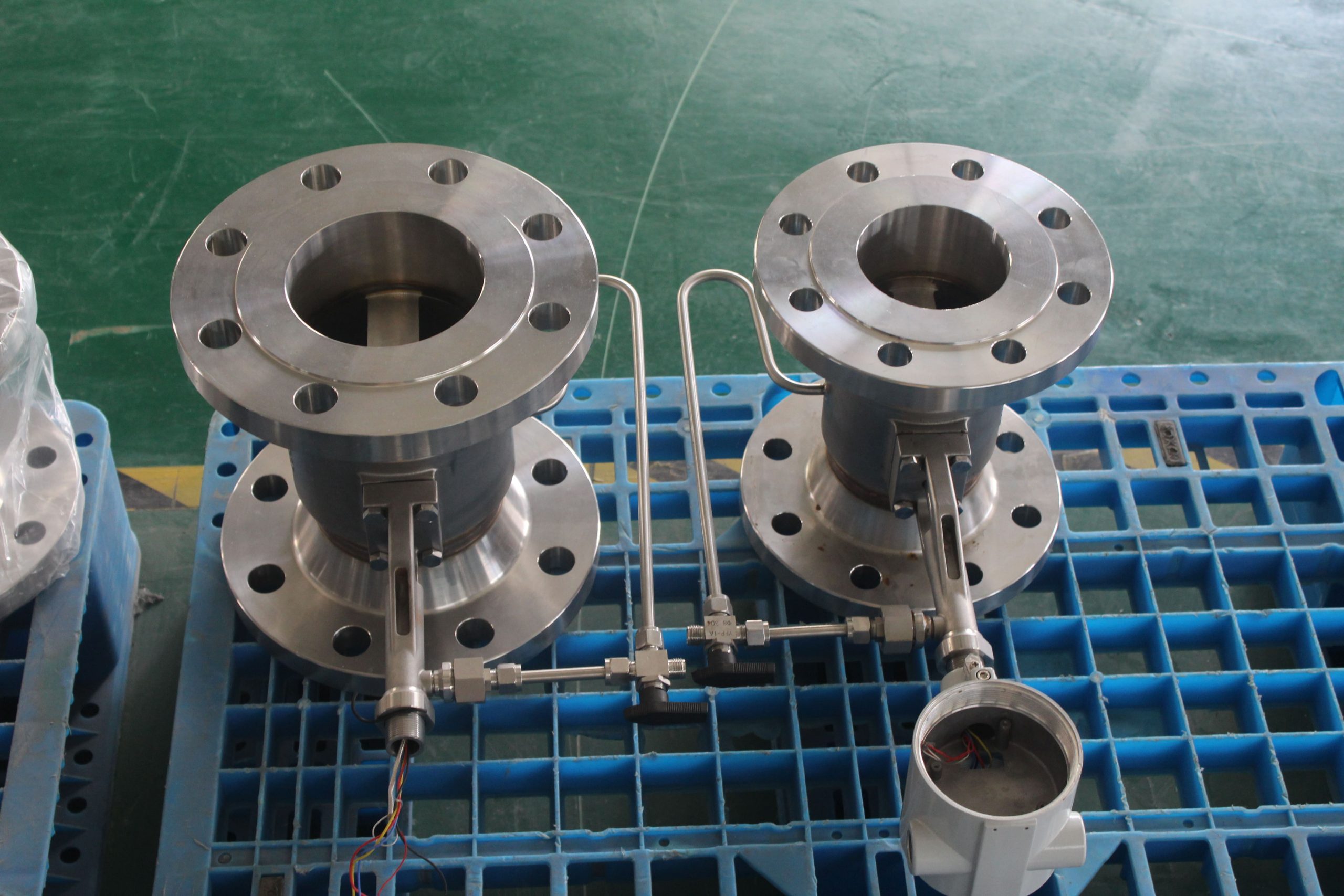
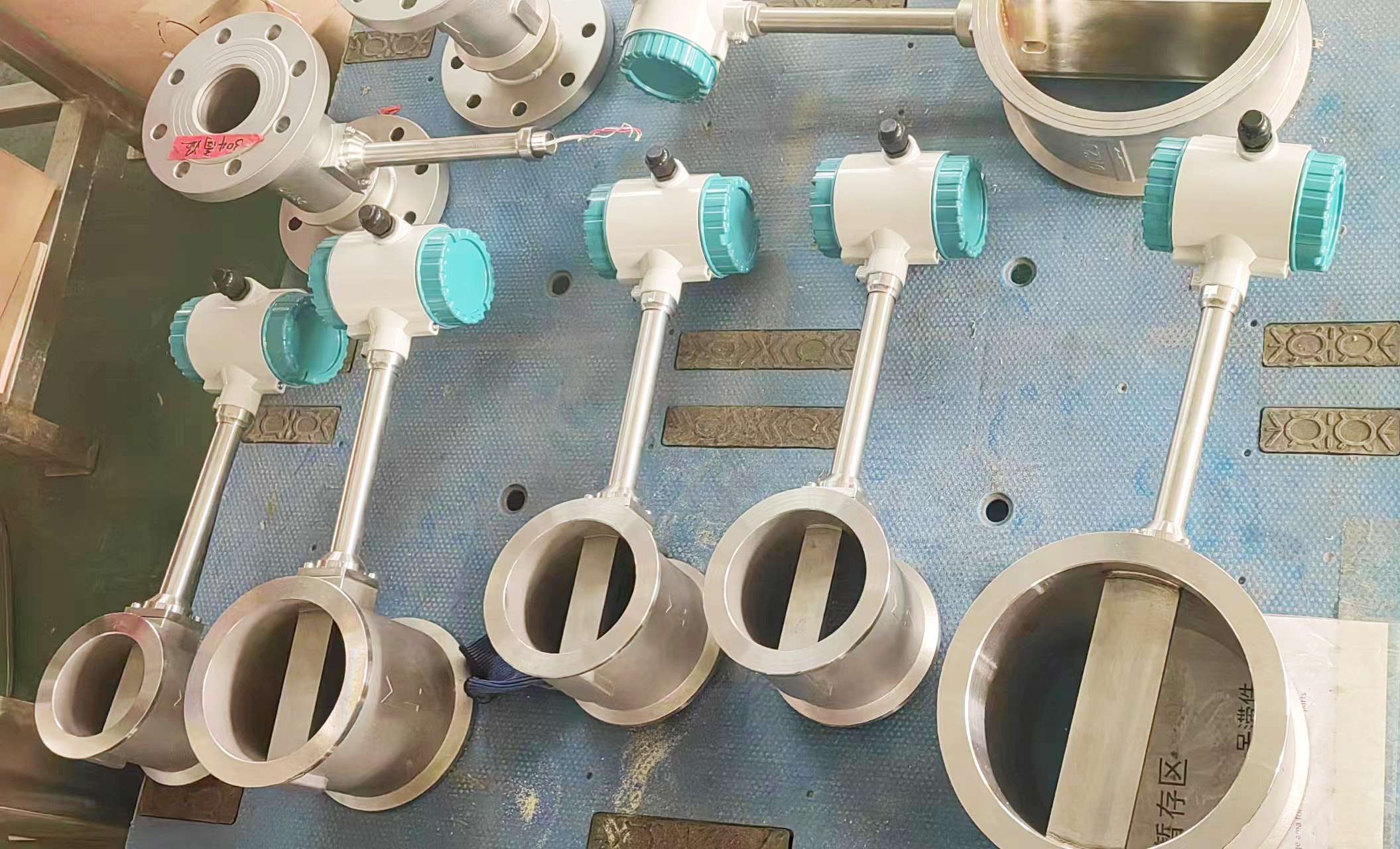
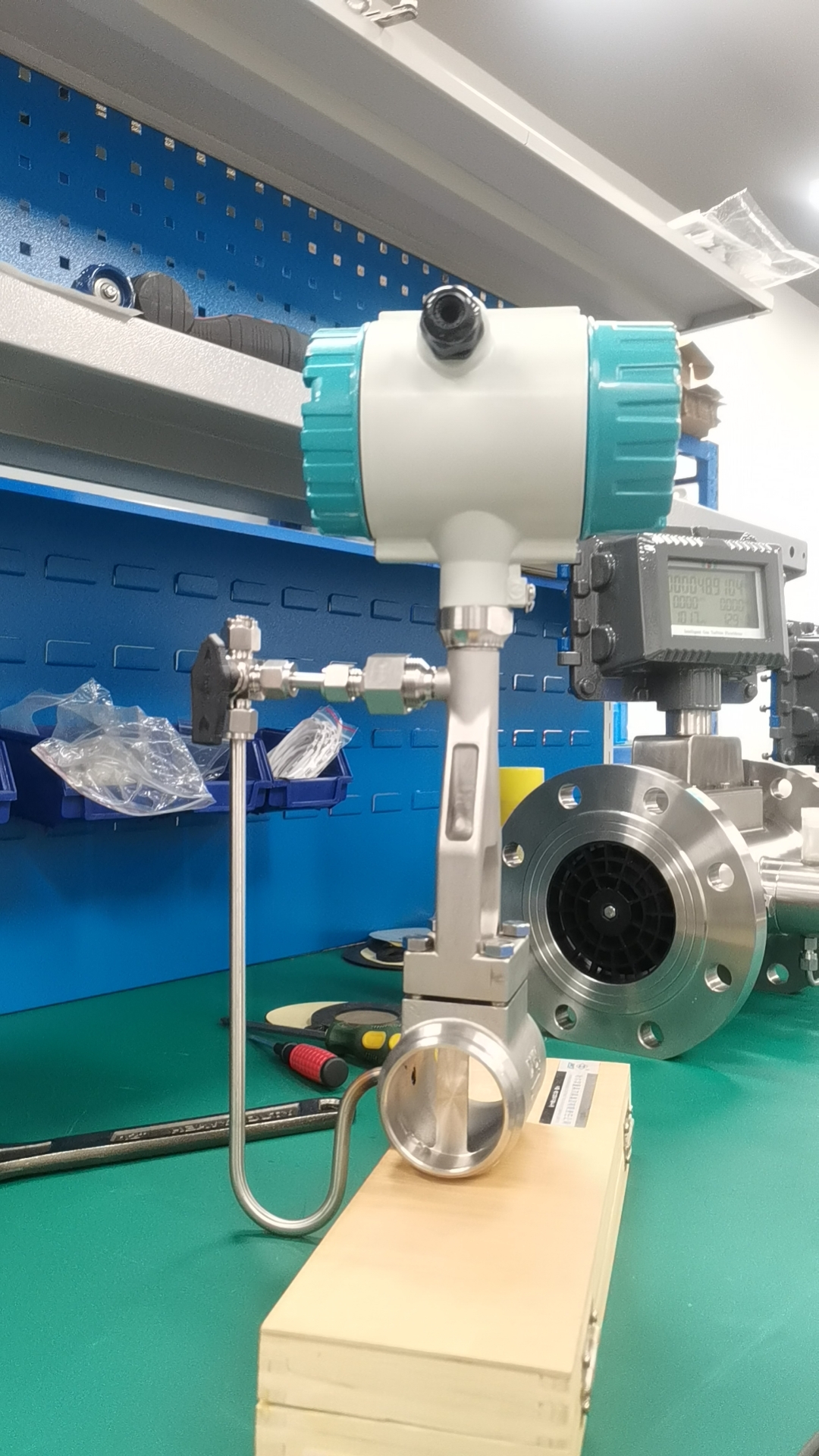
The real weak point is the connection between sensor and electronics—commonly called the “neck.”
The Risk
Heat conduction through the neck can:
-
Overheat internal electronics
-
Accelerate PCB aging
-
Cause signal drift or total failure
Field Testing Focus
During installation, verify:
-
Heat sink (cooling fins) is properly installed
-
Insulation material is correctly applied
-
Ambient temperature around electronics is within limits
Critical Installation Rule
✅ Insulate the pipeline
❌ Do NOT fully insulate the flowmeter neck
Always leave a heat dissipation section exposed.
Best Practice Design
High-quality vortex flowmeters typically feature:
-
Extended neck design
-
Integrated heat dissipation structure
-
Optional remote electronics for extreme conditions
3. Low Flow Signal Stability Test: Don’t Lose Weak Signals
The Real-World Scenario
Steam systems don’t always run at full load.
At night or during partial operation:
-
Flow velocity drops significantly
-
Vortex frequency becomes weak and unstable
Common Failure
Many meters perform well at high flow—but at low flow:
-
Signal disappears
-
Output freezes
-
No measurement despite actual flow
Field Testing Method
Simulate minimum operating conditions:
-
Run system at lowest expected flow rate
-
Observe signal continuity and output stability
Key Adjustment: Signal Filtering
You must verify:
-
Cut-off frequency (low-flow threshold) is adjustable
-
Filtering parameters can be tuned on-site
Performance Benchmark
A high-performance vortex flowmeter should:
-
Ignore vibration noise
-
Capture even weak vortex signals
-
Maintain stable output across full turndown ratio
Conclusion: What Really Defines a Good Vortex Flowmeter
In steam applications, choosing a vortex flowmeter is not just about temperature ratings.
The real evaluation criteria are:
-
Does it resist vibration interference?
-
Can it manage heat transfer to electronics?
-
Will it still measure accurately at low flow?